
MR Spectroscopy of the Brain (Magnetic Resonance Spectroscopy, MRS)
Magnetic Resonance Spectroscopy (MRS) of the brain is an advanced neuroimaging technique that evaluates the biochemical composition and metabolic profile of brain tissue. Unlike conventional MRI, which primarily visualizes anatomical structures and morphological abnormalities, MR spectroscopy analyzes tissue metabolites and provides insight into cellular metabolism, neuronal integrity, membrane turnover, anaerobic metabolism, gliosis, necrosis, inflammation, and tumor biochemistry.
Brain MR spectroscopy is widely used in modern neuroradiology as a complementary diagnostic tool in neuro-oncology, epilepsy imaging, demyelinating disease assessment, neurodegeneration, metabolic disorders, hypoxic brain injury, infection, and treatment monitoring after surgery, chemotherapy, or radiation therapy. MRS does not replace standard brain MRI. Instead, it enhances diagnostic confidence when interpreted together with anatomical MRI sequences, diffusion imaging, susceptibility imaging, perfusion MRI, tractography, and vascular imaging.
What Is Brain MR Spectroscopy?
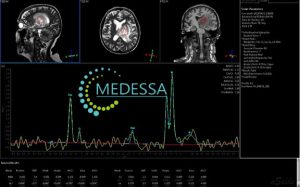
MR spectroscopy is a specialized MRI-based technique that measures concentrations of metabolites within selected brain tissue regions. Instead of generating only anatomical images, spectroscopy produces a spectral graph representing biochemical peaks corresponding to different metabolites. These metabolite peaks provide information about neuronal viability, cellular proliferation, membrane turnover, anaerobic metabolism, inflammation, necrosis, and tissue composition.
Brain MR spectroscopy can evaluate both normal and abnormal tissue. The technique is especially valuable in lesions that are morphologically indeterminate on conventional MRI, helping differentiate neoplastic, inflammatory, infectious, metabolic, ischemic, and treatment-related processes.
What Does MR Spectroscopy Show?
MR spectroscopy provides metabolic information that cannot be obtained from standard MRI alone. It evaluates biochemical tissue composition rather than purely anatomical structure.
- neuronal integrity and neuronal loss;
- cell membrane turnover and cellular proliferation;
- tumor metabolism and aggressiveness;
- necrosis and tissue breakdown;
- anaerobic metabolism and hypoxia;
- gliosis and reactive astrocytosis;
- metabolic abnormalities in epilepsy;
- demyelinating activity in inflammatory diseases;
- infectious and inflammatory metabolic patterns;
- treatment-related changes after surgery or radiotherapy;
- metabolic changes in neurodegeneration and dementia.
How MR Spectroscopy Differs From Conventional Brain MRI
Conventional MRI primarily evaluates anatomy, morphology, tissue signal characteristics, edema, enhancement, diffusion restriction, hemorrhage, and structural abnormalities. MR spectroscopy evaluates metabolism and biochemical tissue composition.
Standard MRI sequences such as T1, T2, FLAIR, DWI, ADC, SWI, contrast-enhanced T1 imaging, perfusion MRI, and MR angiography provide essential structural and physiological information. Spectroscopy adds a metabolic layer of analysis.
For example:
- standard MRI can show that a lesion exists;
- spectroscopy may help determine whether the lesion behaves metabolically like a high-grade tumor, low-grade tumor, necrosis, abscess, demyelination, or treatment-related change.
MR spectroscopy should never be interpreted in isolation. Without full anatomical MRI assessment, spectroscopy loses a substantial part of its diagnostic value.
Why MR Spectroscopy Must Be Performed Together With Standard Brain MRI
MR spectroscopy is not a standalone replacement for conventional MRI. It is an advanced complementary technique integrated into a complete neuro MRI examination.
The diagnostic workflow in neuroradiology generally begins with anatomical and structural assessment using standard MRI sequences. After lesion morphology, location, enhancement pattern, edema, hemorrhage, diffusion characteristics, and vascular features are evaluated, metabolic analysis with spectroscopy may be added to further characterize the abnormality.
Without conventional MRI sequences, spectroscopy cannot adequately evaluate:
- lesion borders;
- edema distribution;
- mass effect;
- hemorrhage;
- diffusion restriction;
- contrast enhancement;
- vascular involvement;
- white matter abnormalities;
- microbleeds or calcifications;
- perfusion characteristics;
- tract involvement.
This is why modern neuroimaging protocols combine MR spectroscopy with structural, diffusion, vascular, perfusion, and susceptibility-sensitive MRI techniques.
Which MRI Sequences Are Used Together With Brain MR Spectroscopy?
T1-Weighted Imaging
T1-weighted imaging provides anatomical detail and is essential for lesion localization, assessment of brain anatomy, evaluation of hemorrhage stages, fat-containing lesions, and comparison with post-contrast imaging. Spectroscopy voxels are often positioned according to T1 anatomical landmarks.
T2-Weighted Imaging
T2-weighted imaging helps identify edema, cystic change, gliosis, chronic ischemia, inflammatory lesions, and many pathological processes with increased water content. T2 abnormalities help guide voxel placement during spectroscopy.
FLAIR Imaging
FLAIR is particularly important for detecting white matter lesions, cortical and juxtacortical abnormalities, demyelinating plaques, encephalitic changes, gliosis, and infiltrative tumor components. FLAIR abnormalities often define the metabolic target area for spectroscopy.
DWI and ADC
Diffusion-weighted imaging and ADC maps evaluate water molecule movement and cellular density. Combining spectroscopy with diffusion imaging improves differentiation between abscess, lymphoma, high-grade glioma, infarction, and treatment-related necrosis.
SWI (Susceptibility-Weighted Imaging)
SWI detects hemorrhage, calcification, microbleeds, vascular abnormalities, and hemosiderin deposition. These findings are important because blood products and susceptibility artifacts may influence spectroscopy interpretation.
T1 Post-Contrast Imaging (T1+C)
Contrast-enhanced MRI evaluates blood-brain barrier disruption, tumor vascularity, active inflammation, postoperative enhancement, and meningeal disease. Spectroscopy findings are significantly more informative when interpreted together with enhancement patterns.
Perfusion MRI
Perfusion MRI measures relative cerebral blood volume and vascularity. Combined perfusion and spectroscopy analysis improves grading of gliomas, differentiation between recurrence and radionecrosis, and assessment of tumor aggressiveness.
TOF MR Angiography
MR angiography helps evaluate vascular anatomy, aneurysms, stenosis, vascular malformations, and tumor vascular relationships. In selected lesions, vascular imaging complements metabolic assessment.
Tractography (DTI)
Diffusion tensor imaging and tractography evaluate white matter tracts and connectivity. In neuro-oncology, combining spectroscopy with tractography helps assess tumor infiltration of eloquent white matter pathways and supports surgical planning.
What Metabolites Are Evaluated During MR Spectroscopy?
Brain MR spectroscopy evaluates several important metabolites. Their concentration and relative ratios help characterize tissue metabolism.
- N-acetylaspartate (NAA);
- Choline (Cho);
- Creatine (Cr);
- Lactate;
- Lipids;
- Myo-inositol;
- Glutamate and glutamine in selected protocols;
- Alanine in certain tumor types;
- other less commonly analyzed metabolites depending on protocol and field strength.
What Do the Main Spectroscopy Peaks Mean?
NAA (N-Acetylaspartate)
NAA is considered a neuronal marker. Reduced NAA generally reflects neuronal loss, neuronal dysfunction, axonal injury, or tissue destruction. Decreased NAA may be seen in tumors, multiple sclerosis, ischemia, epilepsy, trauma, and neurodegeneration.
Choline (Cho)
Choline reflects cell membrane turnover and cellular proliferation. Elevated choline is commonly associated with tumors, active demyelination, inflammation, and increased membrane synthesis.
Creatine (Cr)
Creatine is associated with energy metabolism and is often used as an internal metabolic reference because its concentration tends to remain relatively stable in many tissues.
Lactate
Lactate accumulation indicates anaerobic metabolism and may occur in hypoxia, ischemia, necrosis, abscess, aggressive tumors, mitochondrial disease, and severe metabolic stress.
Lipids
Lipid peaks may indicate necrosis, cell membrane breakdown, high-grade tumor degeneration, or severe tissue destruction.
Myo-Inositol
Myo-inositol is considered a glial marker and may increase in gliosis, astrocytosis, neuroinflammation, Alzheimer-related processes, and low-grade gliosis.
What Does the Cho/NAA Ratio Mean?
The choline-to-NAA ratio is one of the most important parameters in neuro-oncologic spectroscopy. Increased Cho/NAA ratios often suggest increased cellular proliferation combined with neuronal loss.
High Cho/NAA ratios may support:
- high-grade glioma;
- tumor progression;
- active neoplastic infiltration;
- aggressive tumor behavior.
However, spectroscopy interpretation must always consider lesion morphology, enhancement pattern, diffusion characteristics, perfusion imaging, clinical presentation, and histopathology when available.
Types of Brain MR Spectroscopy
Single Voxel Spectroscopy (SVS)
Single Voxel Spectroscopy analyzes metabolites within one selected region of interest. SVS is commonly used for focused evaluation of a known lesion or a specific anatomical region.
Multi Voxel Spectroscopy / Chemical Shift Imaging (CSI)
Multi Voxel Spectroscopy evaluates multiple voxels simultaneously and generates metabolic maps across larger brain regions. CSI is particularly useful for assessing tumor heterogeneity, infiltrative margins, multifocal disease, and metabolic distribution.
How Brain MR Spectroscopy Is Performed
MR spectroscopy is performed as part of a complete brain MRI protocol. After standard MRI sequences are obtained and lesion morphology is evaluated, the radiologist selects the region of interest for metabolic analysis.
Careful voxel positioning is critical because inaccurate placement may contaminate the spectrum with cerebrospinal fluid, bone, fat, hemorrhage, necrosis, or surrounding normal tissue.
The acquired signal is processed into a spectral graph showing metabolite peaks. Interpretation requires understanding of neuroanatomy, MRI physics, pathology, artifacts, field strength limitations, and clinical context.
Technical Methods Used in MR Spectroscopy
PRESS Technique
PRESS (Point RESolved Spectroscopy) is one of the most commonly used spectroscopy acquisition techniques. It provides relatively high signal-to-noise ratio and is widely applied in clinical neuroimaging.
STEAM Technique
STEAM (Stimulated Echo Acquisition Mode) allows shorter echo times and may better detect certain metabolites, although signal intensity may be lower compared with PRESS.
Short TE Spectroscopy
Short echo time spectroscopy allows detection of additional metabolites such as myo-inositol, glutamine, glutamate, and lipids. However, spectra may be more complex and technically challenging to interpret.
Long TE Spectroscopy
Long echo time spectroscopy simplifies spectral interpretation and improves visualization of metabolites such as lactate, choline, and NAA.
Suppression Techniques
Water and fat suppression techniques reduce unwanted signals and improve spectral quality. Proper suppression is essential for accurate metabolite evaluation.
Voxel Positioning
Correct voxel placement is critical to avoid contamination from surrounding tissues, cerebrospinal fluid, bone marrow, hemorrhage, or necrosis.
Spectral Mapping
Spectral mapping in multi-voxel spectroscopy provides metabolic distribution maps that can demonstrate infiltrative tumor spread and regional metabolic heterogeneity.
MR Spectroscopy in Brain Tumors
MR spectroscopy is especially important in neuro-oncology. It helps evaluate tumor metabolism, aggressiveness, necrosis, infiltration, and treatment response.
Common applications include:
- glioma characterization;
- glioblastoma assessment;
- differentiation between low-grade and high-grade tumors;
- evaluation of tumor infiltration beyond visible MRI margins;
- detection of recurrent tumor after therapy;
- differentiation between radionecrosis and recurrence;
- assessment of lymphoma and metastases.
MR Spectroscopy in Epilepsy
In epilepsy imaging, spectroscopy may demonstrate reduced NAA in epileptogenic regions, reflecting neuronal dysfunction or neuronal loss. Combined structural MRI, epilepsy protocol imaging, and spectroscopy may improve localization of seizure-generating zones.
MR Spectroscopy in Demyelinating Diseases
In multiple sclerosis and other demyelinating disorders, spectroscopy may show reduced NAA, increased choline, gliosis-related metabolic changes, and markers of axonal injury. Spectroscopy contributes to understanding disease activity and tissue damage beyond visible lesions.
MR Spectroscopy in Neurodegenerative Disease
MRS may reveal metabolic abnormalities associated with neuronal degeneration, glial activation, and altered energy metabolism in dementia and neurodegenerative disorders.
MR Spectroscopy After Surgery and Radiation Therapy
One of the major applications of spectroscopy is differentiation between recurrent tumor and treatment-related change after surgery or radiation therapy.
Combined spectroscopy and perfusion MRI improve evaluation of:
- radionecrosis;
- pseudoprogression;
- recurrent glioma;
- post-treatment inflammatory change;
- residual tumor tissue.
When Brain MR Spectroscopy Is Recommended
- glioma;
- glioblastoma;
- brain metastases;
- primary CNS lymphoma;
- radionecrosis;
- epilepsy;
- multiple sclerosis;
- encephalitis;
- brain abscess;
- dementia;
- neurodegenerative disorders;
- hypoxic brain injury;
- mitochondrial disease;
- toxic and metabolic encephalopathy;
- indeterminate brain lesions;
- post-treatment tumor evaluation.
Why Brain MR Spectroscopy Is Especially Informative at 3.0 Tesla
MR spectroscopy can be performed at both 1.5 Tesla and 3.0 Tesla, but higher field strength significantly improves spectral quality.
Higher Signal-to-Noise Ratio
3.0 Tesla MRI provides improved signal-to-noise ratio, allowing better spectral quality and improved metabolite detection.
Better Spectral Separation
Higher field strength improves separation between metabolite peaks, reducing overlap and improving interpretation accuracy.
Improved Metabolite Resolution
Small metabolite peaks are more easily identified at 3.0 Tesla, improving analysis of complex lesions.
Higher Diagnostic Accuracy
Improved spectral quality contributes to better lesion characterization and higher diagnostic confidence.
Better Small Lesion Evaluation
Small lesions and infiltrative abnormalities may be evaluated more effectively at higher field strengths.
Improved Tumor Characterization
3.0 Tesla spectroscopy is particularly advantageous in neuro-oncology due to better metabolic resolution and more accurate assessment of tumor heterogeneity.
However, clinically useful spectroscopy can also be performed at 1.5 Tesla, especially when protocols are optimized and interpreted together with complete MRI findings.
Related MRI Examinations
Frequently Asked Questions (FAQ)
What is brain MR spectroscopy?
Brain MR spectroscopy is an advanced MRI technique that evaluates tissue metabolism and biochemical composition rather than only anatomical structure. It measures metabolites such as NAA, choline, creatine, lactate, and lipids.
Does MR spectroscopy replace standard brain MRI?
No. MR spectroscopy is an additional metabolic imaging technique and does not replace conventional MRI sequences such as T1, T2, FLAIR, DWI, SWI, or contrast-enhanced MRI.
Why is MR spectroscopy performed together with standard MRI?
Standard MRI evaluates anatomy, morphology, edema, hemorrhage, enhancement, diffusion restriction, and structural abnormalities. Spectroscopy adds metabolic information and is interpreted together with these anatomical findings.
What does elevated choline mean on spectroscopy?
Elevated choline often reflects increased membrane turnover and cellular proliferation. It may occur in tumors, active demyelination, inflammation, and other metabolically active processes.
What does reduced NAA mean?
Reduced NAA usually indicates neuronal loss, neuronal dysfunction, axonal injury, or tissue destruction.
What is the Cho/NAA ratio?
The Cho/NAA ratio compares choline and NAA levels. Increased ratios may suggest aggressive tumor behavior or active neoplastic infiltration.
Can MR spectroscopy detect brain tumors?
MR spectroscopy can help characterize brain tumors, evaluate aggressiveness, differentiate recurrence from radionecrosis, and assess tumor metabolism.
Can spectroscopy diagnose epilepsy?
Spectroscopy may demonstrate metabolic abnormalities in epileptogenic regions, especially reduced NAA, but epilepsy diagnosis also requires EEG and structural MRI evaluation.
Can MR spectroscopy detect multiple sclerosis?
MR spectroscopy may reveal metabolic abnormalities associated with demyelination, axonal injury, and gliosis in multiple sclerosis.
What is the difference between single voxel and multi voxel spectroscopy?
Single voxel spectroscopy evaluates one selected region, while multi voxel spectroscopy maps metabolic information across larger brain areas.
Is MR spectroscopy useful after brain tumor treatment?
Yes. Combined spectroscopy and perfusion MRI are commonly used to differentiate recurrent tumor from radionecrosis and post-treatment changes.
Why is 3 Tesla spectroscopy considered more informative?
3 Tesla MRI provides higher signal-to-noise ratio, better spectral separation, improved metabolite resolution, and better characterization of small lesions.
Can MR spectroscopy be performed at 1.5 Tesla?
Yes. Useful spectroscopy studies can be performed at 1.5 Tesla, although spectral resolution is generally lower than at 3 Tesla.
What diseases may require MR spectroscopy?
MR spectroscopy may be used in glioma, glioblastoma, metastases, lymphoma, epilepsy, multiple sclerosis, encephalitis, abscess, dementia, hypoxic injury, metabolic encephalopathy, and treatment follow-up.
How long does brain MR spectroscopy take?
Scan duration depends on protocol complexity, number of voxels, and additional MRI sequences. Spectroscopy is usually performed as part of a full neuro MRI examination.