
MRI for Epilepsy (Epilepsy Protocol MRI)
MRI for epilepsy is a highly specialized neuroimaging examination designed to detect structural epileptogenic abnormalities that may be invisible or poorly visualized on routine brain MRI. Epilepsy protocol MRI uses advanced high-resolution neuroimaging techniques, thin-slice sequences, dedicated temporal lobe imaging, optimized hippocampal assessment, and epilepsy-oriented acquisition protocols to identify subtle epileptogenic lesions associated with focal or generalized seizures.
Modern epilepsy MRI plays a central role in epileptology, neuroradiology, neurology, and pre-surgical epilepsy evaluation. It is especially important in patients with drug-resistant epilepsy, focal seizures, temporal lobe epilepsy, unexplained recurrent seizures, or suspected structural epileptogenic substrates.
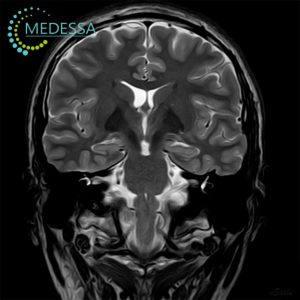
Epilepsy protocol MRI is not a replacement for standard brain MRI. Instead, it represents an advanced extension of a complete neuro MRI examination, combining anatomical, metabolic, structural, diffusion, susceptibility-sensitive, and high-resolution epilepsy-focused sequences.
What Is MRI for Epilepsy?
MRI for epilepsy is a dedicated neuroimaging protocol specifically optimized to identify epileptogenic lesions and structural abnormalities associated with seizure disorders. The examination is tailored to evaluate mesial temporal structures, hippocampi, cortical architecture, gray-white matter junctions, developmental abnormalities, and subtle structural lesions that may trigger epileptic activity.
The primary goal of epilepsy MRI is identification of a structural epileptogenic focus, evaluation of seizure-related abnormalities, and support of clinical decision-making in medical or surgical treatment planning.
What Is Epilepsy Protocol MRI?
Epilepsy protocol MRI is a specialized high-resolution MRI protocol optimized for epilepsy imaging. Compared with routine MRI, epilepsy-oriented protocols use thinner slices, dedicated coronal oblique imaging, optimized temporal lobe visualization, hippocampal protocols, volumetric imaging, and advanced neuroimaging sequences to improve detection of subtle epileptogenic lesions.
The protocol is specifically designed to identify:
- hippocampal sclerosis;
- mesial temporal sclerosis;
- focal cortical dysplasia;
- developmental cortical malformations;
- small tumors;
- cavernomas;
- post-traumatic gliosis;
- vascular malformations;
- encephalomalacia;
- subtle epileptogenic substrates.
How MRI for Epilepsy Differs From Standard Brain MRI
Routine brain MRI protocols are designed for general neuroimaging assessment and may not be sensitive enough to detect subtle epilepsy-related abnormalities. Epilepsy protocol MRI includes dedicated sequences and optimized imaging planes specifically targeted at epileptogenic lesions.
Compared with routine MRI, epilepsy MRI typically includes:
- high-resolution 3D imaging;
- thin-slice temporal lobe imaging;
- coronal oblique imaging perpendicular to the hippocampus;
- hippocampal volumetric analysis;
- specialized FLAIR protocols;
- dedicated cortical dysplasia assessment;
- high-resolution gray-white matter evaluation;
- advanced post-processing techniques.
Why Routine MRI May Fail to Detect the Cause of Epilepsy
Many epileptogenic lesions are extremely subtle and may remain invisible on standard MRI protocols. Small cortical abnormalities, hippocampal sclerosis, focal cortical dysplasia, heterotopia, or mild developmental malformations may require high-resolution epilepsy-oriented imaging for detection.
Routine MRI may miss:
- subtle hippocampal atrophy;
- loss of internal hippocampal architecture;
- minimal cortical dysplasia;
- gray-white matter blurring;
- small epileptogenic tumors;
- subtle temporal lobe abnormalities;
- mild mesial temporal sclerosis;
- small cavernomas or vascular abnormalities.
This is why dedicated epilepsy MRI protocols are critically important in modern epileptology.
Why Epilepsy Protocol MRI Must Be Combined With Full Brain MRI
Epilepsy protocol MRI does not replace standard neuro MRI. It is an extension of a complete brain MRI examination.
The diagnostic workflow begins with evaluation of general brain morphology using standard MRI sequences. After structural assessment is performed, epilepsy-oriented sequences and advanced techniques are used to identify subtle epileptogenic abnormalities.
Without standard MRI sequences, epilepsy protocol MRI loses substantial diagnostic value because anatomical context, vascular abnormalities, edema, hemorrhage, inflammatory changes, and other structural findings cannot be fully evaluated.
Comprehensive epilepsy imaging therefore combines:
- standard anatomical MRI;
- high-resolution epilepsy sequences;
- advanced neuro MRI methods;
- functional assessment when needed;
- clinical and EEG correlation.
Which MRI Sequences Are Used in Epilepsy Protocol MRI?
T1-Weighted Imaging
T1-weighted imaging provides anatomical detail and is essential for cortical morphology assessment, gray-white matter differentiation, structural symmetry evaluation, and lesion localization.
T2-Weighted Imaging
T2 imaging helps detect edema, gliosis, hippocampal signal abnormalities, chronic injury, and structural lesions associated with epilepsy.
FLAIR Imaging
FLAIR is one of the most important sequences in epilepsy MRI because it improves visualization of cortical dysplasia, gliosis, mesial temporal abnormalities, and subtle white matter lesions.
DWI and ADC
Diffusion imaging evaluates water diffusion abnormalities and may help identify acute seizure-related changes, ischemic lesions, encephalitis, and diffusion abnormalities associated with status epilepticus.
SWI (Susceptibility-Weighted Imaging)
SWI is highly sensitive to microhemorrhage, calcification, cavernomas, hemosiderin deposition, and vascular abnormalities that may contribute to epileptic activity.
T1 Post-Contrast Imaging (T1+C)
Contrast-enhanced imaging may be necessary when tumors, inflammation, vascular malformations, infection, postoperative changes, or active pathological enhancement are suspected.
3D T1 Imaging
High-resolution isotropic 3D T1 imaging allows multiplanar reconstruction, volumetric analysis, cortical thickness evaluation, and detailed hippocampal assessment.
Thin-Slice Imaging
Thin slices significantly improve detection of subtle epileptogenic lesions and minimize partial volume averaging artifacts.
Coronal Oblique Imaging
Coronal oblique sequences oriented perpendicular to the hippocampal axis are essential for evaluation of mesial temporal structures and hippocampal sclerosis.
Hippocampal Protocol
Dedicated hippocampal imaging evaluates hippocampal volume, internal architecture, asymmetry, signal abnormalities, and mesial temporal sclerosis.
Volumetry
Volumetric MRI analysis may help quantify hippocampal atrophy and identify subtle structural asymmetries associated with temporal lobe epilepsy.
High-Resolution Temporal Lobe Imaging
Specialized temporal lobe imaging improves detection of epileptogenic lesions in mesial temporal structures and adjacent cortical regions.
Why Thin Coronal Imaging and Hippocampal Evaluation Are Important
Mesial temporal structures are among the most common epileptogenic regions in focal epilepsy. Thin coronal slices oriented perpendicular to the hippocampus improve visualization of hippocampal anatomy, internal architecture, signal abnormalities, and subtle atrophy.
Routine axial imaging alone may fail to detect:
- early mesial temporal sclerosis;
- mild hippocampal atrophy;
- loss of internal hippocampal architecture;
- subtle signal abnormalities;
- small cortical dysplasia adjacent to temporal structures.
What Abnormalities Can MRI Detect in Epilepsy?
Hippocampal Sclerosis
Hippocampal sclerosis is one of the most common structural abnormalities in temporal lobe epilepsy. MRI findings may include hippocampal atrophy, T2/FLAIR hyperintensity, and loss of internal hippocampal architecture.
Mesial Temporal Sclerosis
Mesial temporal sclerosis involves pathological changes in mesial temporal structures and is strongly associated with temporal lobe epilepsy.
Focal Cortical Dysplasia
Focal cortical dysplasia is a common epileptogenic developmental abnormality characterized by cortical thickening, gray-white matter blurring, abnormal gyration, and signal changes.
Polymicrogyria
Polymicrogyria is a cortical malformation involving abnormal cortical folding and excessive small gyri formation.
Heterotopia
Gray matter heterotopia results from abnormal neuronal migration and may present as nodular or band heterotopia associated with epilepsy.
Cortical Developmental Abnormalities
Developmental cortical malformations are important structural epileptogenic substrates and may require high-resolution MRI for detection.
Tumors
Low-grade tumors such as gangliogliomas and dysembryoplastic neuroepithelial tumors may present with seizures and require dedicated epilepsy imaging.
Cavernomas and Vascular Malformations
Vascular abnormalities may serve as epileptogenic lesions and are often best visualized using SWI and high-resolution MRI.
Post-Traumatic Gliosis and Encephalomalacia
Chronic post-traumatic structural abnormalities may become seizure foci years after injury.
Tuberous Sclerosis
Tuberous sclerosis may produce multiple cortical tubers and epileptogenic abnormalities requiring detailed MRI evaluation.
Inflammatory and Post-Ischemic Changes
Inflammatory lesions, encephalitis-related injury, and chronic ischemic damage may contribute to seizure generation.
MRI in Temporal Lobe Epilepsy
Temporal lobe epilepsy is one of the most common forms of focal epilepsy. MRI evaluation focuses on mesial temporal structures, hippocampal integrity, amygdala morphology, temporal cortical abnormalities, and associated white matter changes.
High-resolution temporal lobe imaging is especially important because subtle mesial temporal abnormalities may be surgically treatable.
MRI in Focal Epilepsy
Focal epilepsy often arises from localized structural abnormalities. MRI aims to identify a structural epileptogenic substrate that correlates with EEG findings and seizure semiology.
MRI in Drug-Resistant Epilepsy
Drug-resistant epilepsy is defined by persistent seizures despite adequate trials of antiepileptic medications. MRI plays a major role in pre-surgical evaluation and epileptogenic focus localization.
Pre-Surgical Evaluation
Advanced epilepsy MRI helps determine whether a structural lesion can be surgically targeted.
Lesion Localization
High-resolution MRI is used to localize epileptogenic lesions and define their relationship to eloquent cortex and white matter pathways.
Surgical Planning
Neuroimaging findings contribute to surgical strategy, resection planning, tract preservation, and risk assessment.
Temporal Lobe Epilepsy Surgery Planning
Detailed hippocampal and mesial temporal assessment is essential in candidates for temporal lobe epilepsy surgery.
MRI in Pediatric Epilepsy
Epilepsy MRI is extremely important in children because developmental abnormalities, migration disorders, and cortical malformations are common causes of pediatric epilepsy.
High-resolution MRI may detect:
- focal cortical dysplasia;
- heterotopia;
- polymicrogyria;
- tuberous sclerosis;
- perinatal injury;
- developmental abnormalities.
Additional Advanced MRI Methods in Epilepsy
MR Spectroscopy
MR spectroscopy evaluates tissue metabolism and may demonstrate reduced NAA or metabolic abnormalities in epileptogenic regions.
DTI and Tractography
Diffusion tensor imaging and tractography assess white matter tracts and structural connectivity within seizure networks.
Perfusion MRI
Perfusion imaging evaluates cerebral blood flow and vascular physiology that may change in epileptogenic tissue.
Functional MRI (fMRI)
Functional MRI may help localize language and motor cortex before epilepsy surgery.
Volumetry
Volumetric analysis may identify subtle hippocampal asymmetry and mesial temporal atrophy.
Why 3.0 Tesla Is Especially Important in Epilepsy MRI
Higher Signal-to-Noise Ratio
3.0 Tesla MRI provides improved signal quality and better lesion conspicuity.
Better Visualization of Subtle Lesions
Subtle cortical dysplasia and small epileptogenic abnormalities are more likely to be detected at higher field strengths.
Improved Hippocampal Assessment
High-resolution imaging improves visualization of hippocampal architecture and mesial temporal structures.
Improved Temporal Lobe Imaging
Temporal lobe anatomy is visualized with greater detail and improved contrast resolution.
Thin-Slice High-Resolution Imaging
3.0 Tesla systems allow more reliable thin-slice imaging and improved multiplanar reconstruction quality.
Improved Epileptogenic Focus Detection
Higher field strength contributes to improved detection of subtle structural epileptogenic substrates.
However, clinically valuable epilepsy MRI can also be performed at 1.5 Tesla when optimized epilepsy protocols are used and interpreted by experienced neuroradiologists.
Related Neuro MRI Examinations
Frequently Asked Questions (FAQ)
Can epilepsy be seen on MRI?
Yes. MRI may detect structural epileptogenic abnormalities such as hippocampal sclerosis, focal cortical dysplasia, tumors, cavernomas, developmental abnormalities, gliosis, or post-traumatic lesions associated with seizures.
What does MRI show in epilepsy?
MRI may show structural epileptogenic substrates including mesial temporal sclerosis, cortical dysplasia, developmental malformations, tumors, vascular abnormalities, gliosis, encephalomalacia, and inflammatory changes.
What is epilepsy protocol MRI?
Epilepsy protocol MRI is a specialized high-resolution neuro MRI examination optimized for detection of subtle epileptogenic lesions using dedicated epilepsy-oriented sequences and imaging planes.
Why can routine MRI be normal in epilepsy?
Many epileptogenic lesions are extremely subtle and may not be visible on standard MRI protocols. Dedicated epilepsy MRI improves lesion detection using high-resolution imaging and specialized sequences.
What is hippocampal sclerosis?
Hippocampal sclerosis is a structural abnormality involving hippocampal atrophy, gliosis, and neuronal loss. It is one of the most common findings in temporal lobe epilepsy.
Is contrast necessary for epilepsy MRI?
Contrast is not always required, but it may be useful when tumors, inflammation, infection, vascular abnormalities, or postoperative changes are suspected.
Why is 3 Tesla MRI important in epilepsy imaging?
3 Tesla MRI provides higher signal-to-noise ratio, improved lesion visualization, better cortical dysplasia detection, improved hippocampal assessment, and higher-resolution imaging.
What is an epileptogenic focus?
An epileptogenic focus is a brain region responsible for seizure generation or propagation.
Can epilepsy MRI be performed in children?
Yes. Pediatric epilepsy MRI is important for detecting developmental abnormalities, migration disorders, cortical dysplasia, and other structural causes of seizures.
How long does epilepsy MRI take?
The examination duration depends on protocol complexity, additional sequences, contrast administration, and advanced imaging techniques.
Can MRI determine the cause of seizures?
MRI may identify structural causes of seizures, although some patients with epilepsy can have normal MRI findings.
What is cortical dysplasia?
Focal cortical dysplasia is a developmental cortical abnormality involving abnormal cortical organization and gray-white matter architecture that may cause epilepsy.
Can an epileptogenic lesion be missed on MRI?
Yes. Subtle lesions may remain undetected on routine MRI, especially without dedicated epilepsy protocols or high-resolution imaging.
How does epilepsy protocol MRI differ from routine MRI?
Epilepsy MRI uses thinner slices, dedicated temporal lobe imaging, coronal oblique sequences, hippocampal protocols, volumetry, and high-resolution imaging optimized for epileptogenic lesion detection.
Which additional MRI methods are used in epilepsy evaluation?
Advanced methods may include MR spectroscopy, DTI and tractography, perfusion MRI, functional MRI, and volumetric analysis.