
MRI of the Thigh (Single Anatomical Region)
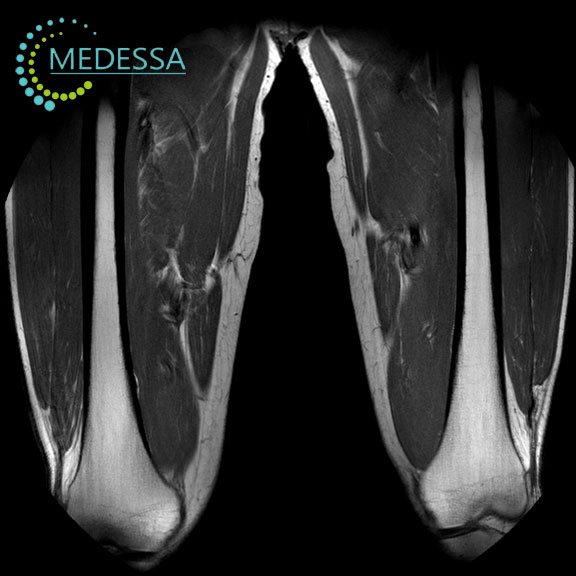
Thigh MRI is a modern non-invasive imaging method that provides detailed visualization of the bones, muscles, tendons, ligaments, vessels, and soft tissues of the thigh. The examination is performed using magnetic fields and radio waves without ionizing radiation.
This technique is widely used in traumatology, orthopedics, oncology, and sports medicine to detect traumatic, inflammatory, degenerative, and tumor-related changes.
Indications for Thigh MRI
Thigh pain
MRI helps identify the cause of pain, including muscle strain, tears, tendinopathy, soft tissue swelling, and bone involvement.
Traumatic injuries
The examination can reveal fractures, bruising, hematomas, muscle injuries, tendon damage, and ligament abnormalities.
Degenerative and inflammatory changes
MRI is useful in evaluating arthritis, arthrosis, soft tissue inflammation, and related structural abnormalities.
Suspected tumors
The method can detect bone and soft tissue tumors of the thigh and assess their size, location, and extent.
Advantages of Thigh MRI
- high-resolution visualization of anatomical structures;
- excellent assessment of muscles, tendons, ligaments, and soft tissues;
- multiplanar imaging for more accurate evaluation;
- no exposure to ionizing radiation;
- valuable support for staging disease and treatment planning.
Conditions That May Be Detected
- muscle tears and partial ruptures;
- tendinitis and tendon injuries;
- hematomas and post-traumatic changes;
- soft tissue inflammation;
- benign and malignant tumors;
- metastatic involvement of bone and soft tissues.
Why Early Diagnosis Matters
Early detection of thigh pathology makes it possible to start treatment sooner, clarify the extent of injury or disease, and reduce the risk of complications. This is especially important in cases of trauma, mass lesions, and inflammatory processes.
Thigh MRI is a highly informative diagnostic tool that helps physicians establish an accurate diagnosis and choose the most appropriate treatment strategy.