
Lower Leg MRI (Single Anatomical Region)
MRI of the lower leg is a non-invasive imaging technique that provides detailed visualization of bones, muscles, tendons, ligaments, and blood vessels of the lower leg.
The examination is commonly used in orthopedics and traumatology to detect injuries, inflammatory conditions, and degenerative disorders.
Indications
Pain in the lower leg
MRI helps determine the cause of persistent pain when other imaging methods are inconclusive.
Traumatic injuries
The method can detect fractures, ligament injuries, tendon tears, and muscle damage.
Degenerative conditions
MRI is used to assess joint and cartilage abnormalities.
Inflammatory diseases
The examination may reveal inflammation in soft tissues or bones.
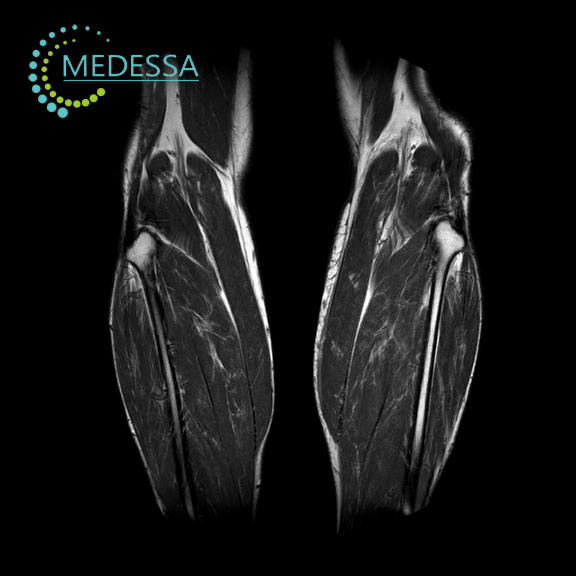
Advantages of MRI
- high-resolution imaging;
- multiplanar visualization;
- no ionizing radiation.
MRI of the lower leg is a valuable diagnostic tool that helps physicians accurately assess injuries and diseases of the lower extremity.