
MRI of the Orbits and Optic Nerves
MRI of the orbits and optic nerves is a specialized neuro-ophthalmic MRI examination used to evaluate the eyes, optic nerves, optic nerve sheaths, extraocular muscles, lacrimal glands, retrobulbar fat, orbital apex, cavernous sinus region, optic chiasm, and visual pathways. This examination is especially important when visual symptoms may be caused by inflammation, demyelination, tumor, compression, vascular abnormality, trauma, or pathology located along the visual pathway.
Orbital MRI is not simply an “eye scan.” It is a detailed neuroimaging examination that connects ophthalmology, neurology, neuroradiology, endocrinology, oncology, and neurosurgery. The goal is to determine whether visual disturbance originates within the orbit, optic nerve, optic chiasm, pituitary region, brain, or another part of the central nervous system.
MRI of the orbits does not replace a complete brain MRI. It is best understood as a dedicated extension of neuro MRI, focused on the orbital structures and anterior visual pathway while also requiring evaluation of the brain, optic chiasm, hypothalamic region, sella turcica, pituitary gland, optic tracts, occipital lobes, and other central nervous system structures.
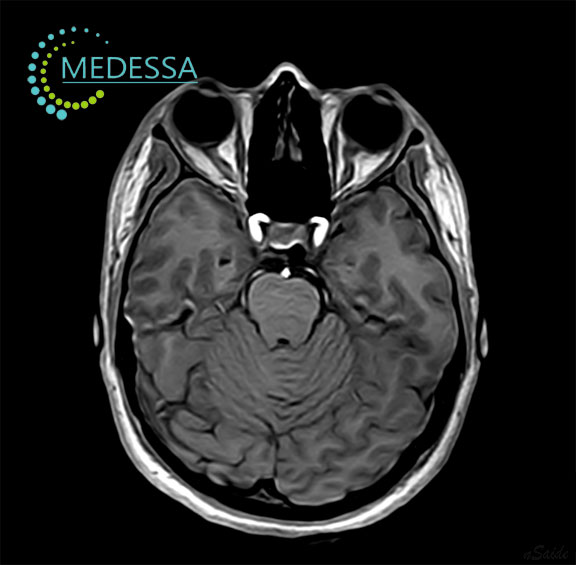
What Is MRI of the Orbits and Optic Nerves?
MRI of the orbits and optic nerves is a high-resolution imaging examination designed to evaluate the orbital soft tissues and neuro-ophthalmic structures. It provides excellent soft-tissue contrast and is particularly useful for detecting optic neuritis, demyelinating disease, orbital tumors, inflammatory orbital disease, thyroid eye disease, optic nerve compression, orbital apex syndrome, and lesions involving the visual pathways.
Dedicated orbital MRI uses thin slices, small field of view, fat suppression techniques, multiplanar imaging, and contrast-enhanced sequences when indicated. These technical elements are essential because the optic nerves, ocular muscles, lacrimal glands, orbital apex, and cavernous sinus region contain small anatomical structures surrounded by bright orbital fat.
When Is Orbital MRI Recommended?
MRI of the orbits may be recommended when symptoms, ophthalmological findings, or neurological signs suggest orbital, optic nerve, or visual pathway pathology.
- acute or subacute visual loss;
- suspected optic neuritis;
- eye pain, especially pain worsened by eye movement;
- double vision or abnormal eye movements;
- exophthalmos or proptosis;
- suspected thyroid eye disease;
- unexplained optic nerve swelling or optic atrophy;
- suspected orbital tumor or orbital mass;
- suspected optic nerve sheath meningioma or optic pathway glioma;
- orbital trauma with suspected soft tissue or optic nerve injury;
- orbital inflammation or orbital pseudotumor;
- suspected cavernous sinus or orbital apex pathology;
- visual field defects suggesting optic chiasm or optic tract involvement;
- suspected multiple sclerosis or demyelinating optic neuropathy;
- postoperative or post-treatment follow-up of orbital disease.
How Orbital MRI Differs From Standard Brain MRI
Standard brain MRI evaluates the brain parenchyma, cortex, white matter, ventricles, brainstem, cerebellum, meninges, and major intracranial structures. However, routine brain MRI is often not detailed enough for the optic nerves, orbital apex, extraocular muscles, lacrimal glands, and small intraorbital lesions.
Orbital MRI differs from standard brain MRI because it uses:
- thin-slice orbital imaging;
- small field-of-view acquisition;
- fat suppression techniques;
- dedicated coronal and axial planes through the orbits;
- high-resolution optic nerve imaging;
- post-contrast fat-suppressed imaging when indicated;
- targeted evaluation of the orbital apex and cavernous sinus.
Why Orbital MRI Should Be Performed Together With Complete Brain MRI
Orbital MRI does not replace full brain MRI. In neuro-ophthalmic pathology, it is often necessary to evaluate not only the orbits but also the entire visual pathway and relevant intracranial structures.
A complete assessment may include:
- brain parenchyma;
- optic nerves;
- optic chiasm;
- optic tracts;
- hypothalamic region;
- sella turcica;
- pituitary gland;
- cavernous sinuses;
- occipital lobes;
- brainstem;
- demyelinating lesions of the central nervous system;
- vascular and inflammatory intracranial disease.
An isolated orbital MRI may be insufficient because visual symptoms can originate outside the orbit. For example, visual field defects may be caused by pituitary macroadenoma, optic chiasm compression, demyelinating plaques, occipital lobe lesions, stroke, inflammatory disease, or intracranial tumors. Therefore, orbital MRI should be considered part of a comprehensive neuro MRI evaluation when the clinical question involves visual loss, optic neuropathy, diplopia, or neuro-ophthalmic symptoms.
Which Anatomical Structures Are Evaluated on Orbital MRI?
A dedicated orbital MRI examination evaluates the eyes, optic nerves, orbital soft tissues, visual pathways, and adjacent skull base structures.
- Eyeball: globe contour, intraocular masses, posterior globe abnormalities, and traumatic changes.
- Optic nerve: signal intensity, thickness, enhancement, atrophy, inflammation, and compression.
- Optic nerve sheath: sheath thickening, enhancement, meningioma, perineural inflammation, and CSF space enlargement.
- Optic chiasm: compression, demyelination, glioma, pituitary-related mass effect, and inflammatory involvement.
- Optic tracts: retrochiasmal visual pathway abnormalities and demyelinating or ischemic changes.
- Oculomotor nerves: indirect assessment of cranial nerves III, IV, and VI in the cavernous sinus, orbital apex, and brainstem pathways.
- Extraocular muscles: enlargement, inflammation, thyroid eye disease, myositis, trauma, and infiltration.
- Lacrimal gland: inflammation, enlargement, tumors, lymphoma, and autoimmune disease.
- Retrobulbar fat: inflammatory infiltration, edema, mass effect, and vascular lesions.
- Superior orbital fissure: neurovascular involvement and orbital apex syndrome.
- Cavernous sinus: cranial nerve involvement, thrombosis, tumor extension, inflammation, and vascular lesions.
- Orbital apex: optic nerve compression, apical crowding, tumor extension, inflammatory disease, and cavernous sinus communication.
Which MRI Sequences Are Used for Orbital MRI?
T1-Weighted Imaging
T1-weighted imaging provides anatomical detail and is useful for assessing orbital fat, hemorrhage, mass morphology, optic nerve anatomy, and baseline pre-contrast signal.
T2-Weighted Imaging
T2-weighted imaging helps identify edema, inflammation, cystic lesions, orbital fluid collections, optic nerve signal changes, and extraocular muscle abnormalities.
STIR Imaging
STIR is highly useful in orbital imaging because it suppresses fat signal and highlights edema, inflammation, optic neuritis, and active thyroid eye disease.
T2 Fat-Saturated Imaging
T2 fat-saturated sequences improve detection of optic nerve swelling, inflammatory orbital disease, extraocular muscle edema, and retrobulbar pathology by suppressing the bright signal of orbital fat.
T1 Fat-Saturated Imaging
T1 fat-saturated imaging is especially important after contrast administration because it improves visibility of enhancing lesions, optic nerve enhancement, orbital tumors, lacrimal gland disease, and inflammatory changes.
DWI and ADC
Diffusion-weighted imaging and ADC maps can help evaluate highly cellular tumors such as lymphoma, abscess, restricted diffusion, ischemic injury, and some inflammatory or malignant orbital lesions.
T1 Post-Contrast Imaging
Post-contrast T1-weighted imaging evaluates enhancement of the optic nerve, optic nerve sheath, orbital tumors, inflammatory lesions, lacrimal gland disease, cavernous sinus pathology, and postoperative changes.
Thin-Slice Imaging
Thin-slice imaging is essential because the optic nerves, ocular muscles, orbital apex, and small orbital lesions are very small structures. Thin slices reduce partial volume artifacts and improve diagnostic accuracy.
Fat Suppression Techniques
Fat suppression is critical in orbital MRI because the orbit contains abundant fat that may obscure small enhancing or inflammatory lesions. Suppressing fat signal improves visualization of the optic nerves, extraocular muscles, orbital apex, lacrimal glands, and post-contrast enhancement.
Why Fat Suppression and Thin Slices Are Essential
The orbit is one of the most technically demanding regions in MRI because small nerves, muscles, vessels, glands, and lesions are surrounded by bright orbital fat. Without fat suppression, subtle enhancement or edema may be difficult to detect. Without thin slices, small optic nerve lesions, orbital apex abnormalities, or early inflammatory changes may be missed.
High spatial resolution is important for evaluating:
- optic nerve inflammation;
- optic nerve sheath lesions;
- orbital apex compression;
- extraocular muscle enlargement;
- small orbital masses;
- lacrimal gland lesions;
- cavernous sinus extension;
- traumatic injury to orbital soft tissues.
MRI of the Optic Nerve
MRI of the optic nerve evaluates the intraorbital, intracanalicular, and intracranial segments of the nerve. It can detect optic nerve swelling, high T2 signal, contrast enhancement, atrophy, compression, tumor infiltration, traumatic injury, and inflammatory changes.
Optic nerve MRI is particularly important in suspected optic neuritis, multiple sclerosis, neuromyelitis optica spectrum disorder, MOG antibody-associated disease, optic nerve sheath meningioma, optic pathway glioma, orbital apex syndrome, and compressive optic neuropathy.
MRI of the Optic Chiasm
The optic chiasm is the crossing point of optic nerve fibers above the pituitary gland. MRI evaluates chiasmal compression, inflammation, demyelination, glioma, pituitary macroadenoma, craniopharyngioma, hypothalamic lesions, and other suprasellar pathologies.
Assessment of the optic chiasm is essential when patients have bitemporal visual field defects, unexplained visual loss, endocrine symptoms, or suspected sellar and suprasellar masses.
MRI of the Oculomotor Nerves
The oculomotor, trochlear, and abducens nerves control eye movements. Direct visualization of these small nerves can be challenging, but MRI can evaluate their brainstem nuclei, cisternal course, cavernous sinus region, superior orbital fissure, and orbital apex.
Orbital and brain MRI may be useful in diplopia, ophthalmoplegia, cavernous sinus syndrome, orbital apex syndrome, inflammatory neuropathy, aneurysm-related compression, tumor invasion, or demyelinating disease.
MRI of the Extraocular Muscles
The extraocular muscles control eye movement and are frequently involved in thyroid eye disease, orbital myositis, trauma, inflammation, infection, lymphoma, and infiltrative disorders.
MRI evaluates muscle size, symmetry, edema, enhancement, tendon involvement, orbital apex crowding, and possible optic nerve compression.
MRI of the Lacrimal Gland
MRI of the lacrimal gland evaluates gland enlargement, inflammation, autoimmune disease, lymphoma, epithelial tumors, metastases, and orbital extension. Lacrimal gland lesions may present with swelling of the upper outer orbit, pain, proptosis, or diplopia.
Orbital MRI in Optic Neuritis
Optic neuritis is inflammation of the optic nerve and may cause acute or subacute visual loss, pain with eye movement, color vision impairment, and visual field defects. MRI findings may include optic nerve swelling, high T2 or STIR signal, and contrast enhancement. Radiopaedia describes optic neuritis as typically visible on MRI as optic nerve swelling, high T2 signal, and enhancement. :contentReference[oaicite:0]{index=0}
Orbital MRI is important because it helps confirm optic nerve involvement, determine the segment affected, assess enhancement, exclude compressive lesions, and evaluate associated brain lesions suggestive of demyelinating disease.
Orbital MRI in Multiple Sclerosis
Optic neuritis may be the first clinical manifestation of multiple sclerosis. MRI of the orbits can detect optic nerve inflammation, while brain MRI evaluates demyelinating lesions in typical locations such as periventricular, juxtacortical, infratentorial, and spinal cord regions when included in the protocol.
Complex neuro-ophthalmic evaluation is important because optic nerve symptoms may be related not only to the orbit but also to demyelinating disease within the central nervous system. Orbital MRI should therefore be interpreted together with complete brain MRI and clinical neurological data.
Orbital MRI in Thyroid Eye Disease
Thyroid eye disease, also known as Graves orbitopathy or endocrine ophthalmopathy, is an autoimmune orbital disorder often associated with Graves disease. MRI may show enlargement of the extraocular muscle bellies, orbital fat expansion, proptosis, apical crowding, inflammatory edema, and optic nerve compression. Radiopaedia describes thyroid-associated orbitopathy as typically characterized by bilateral and symmetrical enlargement of extraocular muscle bellies, with possible optic nerve compression. :contentReference[oaicite:1]{index=1}
MRI is particularly useful for evaluating soft tissue inflammation, disease activity, extraocular muscle edema, orbital apex crowding, and compressive optic neuropathy. STIR and fat-suppressed T2 sequences help identify active inflammatory changes, while T1 and post-contrast sequences help evaluate anatomy and complications.
Orbital MRI in Orbital Tumors
Orbital MRI is one of the most informative methods for evaluating orbital tumors because it demonstrates lesion location, tissue characteristics, enhancement pattern, relationship to the optic nerve, extraocular muscles, orbital apex, lacrimal gland, cavernous sinus, and intracranial structures.
Orbital tumors and tumor-like lesions may include:
- Optic nerve sheath meningioma: a tumor arising from the optic nerve sheath; Radiopaedia notes that these tumors arise from arachnoid cap cells of the optic nerve sheath. :contentReference[oaicite:2]{index=2}
- Optic pathway glioma: tumor involving the optic nerve, chiasm, or optic tracts, often associated with pediatric neuro-ophthalmology and neurofibromatosis type 1.
- Lymphoma: a highly cellular orbital tumor that may show diffusion restriction.
- Cavernous venous malformation: historically called cavernous hemangioma, often presenting as a well-defined intraconal mass.
- Metastases: secondary orbital involvement from systemic malignancy.
- Lacrimal gland tumors: epithelial, lymphoid, inflammatory, or metastatic lesions involving the lacrimal gland.
- Intraconal and extraconal masses: lesions classified by their location relative to the muscle cone.
Orbital MRI in Exophthalmos
Exophthalmos, or proptosis, means anterior displacement of the globe. MRI helps identify the cause of proptosis by evaluating orbital fat, extraocular muscles, tumors, vascular lesions, inflammatory disease, trauma, and orbital apex pathology.
Common MRI-detectable causes of exophthalmos include:
- thyroid eye disease;
- orbital tumors;
- inflammatory orbital disease;
- orbital pseudotumor;
- vascular malformations;
- carotid-cavernous fistula-related orbital venous congestion;
- lacrimal gland enlargement;
- traumatic hematoma;
- orbital cellulitis or abscess.
Orbital MRI in Trauma
Orbital MRI may be useful in selected trauma cases when soft tissue, optic nerve, muscle, hematoma, or intracranial extension requires evaluation. CT is often preferred for orbital fractures and bony trauma, while MRI provides superior assessment of optic nerve injury, muscle entrapment complications, hemorrhagic soft tissue lesions, and post-traumatic inflammatory or ischemic changes.
Orbital MRI in Children
In children, orbital MRI may be used to evaluate optic pathway glioma, congenital abnormalities, orbital tumors, inflammatory disease, trauma, strabismus-related causes, optic nerve abnormalities, and neurocutaneous syndromes. Pediatric orbital MRI requires careful protocol planning, motion control, and age-appropriate preparation. Sedation may be considered when a child cannot remain still during the examination.
Diseases Detected With Orbital MRI
- optic neuritis;
- multiple sclerosis-related optic nerve involvement;
- neuromyelitis optica spectrum disorder;
- MOG antibody-associated optic neuritis;
- orbital tumors;
- thyroid eye disease;
- inflammatory orbital disease;
- orbital pseudotumor;
- orbital lymphoma;
- optic nerve sheath meningioma;
- optic pathway glioma;
- orbital metastases;
- vascular malformations;
- cavernous sinus disease;
- orbital apex syndrome;
- lacrimal gland tumors and inflammation;
- traumatic optic nerve and soft tissue lesions.
Why 3.0 Tesla and 1.5 Tesla Matter in Orbital MRI
MRI of the orbits and optic nerves requires high spatial resolution because the structures are small and surrounded by orbital fat, bone, air-containing sinuses, vessels, and complex skull base anatomy. Both 1.5 Tesla and 3.0 Tesla MRI systems can be used effectively when orbital protocols are optimized.
Advantages of 3.0 Tesla MRI
- higher signal-to-noise ratio;
- better optic nerve visualization;
- improved orbital soft tissue contrast;
- better detection of small lesions;
- improved assessment of the optic chiasm and orbital apex;
- higher spatial resolution;
- improved thin-slice imaging;
- better visualization of subtle enhancement when fat suppression is optimized.
Role of 1.5 Tesla MRI
Modern 1.5 Tesla MRI can also provide clinically useful orbital imaging, especially when thin-slice imaging, fat suppression, STIR, and contrast-enhanced protocols are properly optimized. Diagnostic quality depends not only on magnetic field strength but also on protocol design, motion control, sequence selection, clinical information, and radiologist expertise.
Orbital MRI vs CT
MRI and CT are complementary imaging methods. MRI provides superior soft tissue contrast and is preferred for optic nerve, orbital soft tissue, cavernous sinus, orbital apex, demyelinating, inflammatory, and tumor evaluation. CT is better for bone detail, orbital fractures, calcification, and some acute trauma scenarios.
| Comparison | Orbital MRI | Orbital CT |
|---|---|---|
| Soft tissue contrast | Excellent for optic nerves, muscles, tumors, inflammation | More limited soft tissue contrast |
| Bone evaluation | Limited compared with CT | Excellent for fractures and bony anatomy |
| Optic neuritis | Preferred method | Limited diagnostic value |
| Thyroid eye disease | Excellent for inflammation and muscle edema | Excellent for bony orbit and apical crowding anatomy |
| Radiation | No ionizing radiation | Uses ionizing radiation |
| Contrast | Gadolinium-based contrast when indicated | Iodinated contrast when indicated |
Related MRI Examinations
Frequently Asked Questions (FAQ)
What does orbital MRI show?
Orbital MRI shows the eyeballs, optic nerves, optic nerve sheaths, extraocular muscles, lacrimal glands, retrobulbar fat, orbital apex, cavernous sinuses, optic chiasm, and surrounding neuro-ophthalmic structures. It can detect optic neuritis, tumors, inflammation, thyroid eye disease, trauma, vascular lesions, and optic nerve compression.
Can the optic nerve be seen on MRI?
Yes. Dedicated orbital MRI with thin slices and fat suppression can visualize the optic nerve, optic nerve sheath, optic canal, and optic chiasm. It can show swelling, inflammation, enhancement, atrophy, compression, and tumor involvement.
What is optic neuritis?
Optic neuritis is inflammation of the optic nerve. It may cause visual loss, pain with eye movement, reduced color vision, and visual field defects. MRI may show high T2/STIR signal and contrast enhancement of the optic nerve.
Can MRI detect multiple sclerosis?
Orbital MRI can show optic nerve involvement, while brain MRI evaluates demyelinating lesions in the central nervous system. MRI findings must be interpreted together with neurological symptoms, examination, and diagnostic criteria.
Is contrast needed for orbital MRI?
Contrast is often important when evaluating optic neuritis, orbital tumors, optic nerve sheath meningioma, inflammatory disease, cavernous sinus pathology, metastases, and postoperative changes. Some protocols may be performed without contrast depending on the clinical question.
Can orbital MRI detect tumors?
Yes. Orbital MRI can detect optic nerve sheath meningioma, optic pathway glioma, lymphoma, cavernous venous malformation, metastases, lacrimal gland tumors, and intraconal or extraconal orbital masses.
What is exophthalmos?
Exophthalmos, or proptosis, is forward displacement of the eyeball. MRI can help determine whether it is caused by thyroid eye disease, tumor, inflammation, vascular abnormality, trauma, or orbital fat expansion.
Can MRI evaluate eye movement nerves?
MRI can evaluate the pathways of cranial nerves III, IV, and VI indirectly through the brainstem, cavernous sinus, superior orbital fissure, and orbital apex. It is useful in diplopia, ophthalmoplegia, and cavernous sinus syndrome.
Why is 3.0 Tesla MRI useful for orbital imaging?
3.0 Tesla MRI may provide higher signal-to-noise ratio, better optic nerve visualization, improved soft tissue contrast, higher spatial resolution, and better detection of small orbital lesions.
Can orbital MRI be performed at 1.5 Tesla?
Yes. Modern 1.5 Tesla MRI can provide clinically valuable orbital imaging when thin slices, fat suppression, STIR, and contrast-enhanced protocols are optimized.
Can children undergo orbital MRI?
Yes. Orbital MRI can be performed in children when clinically indicated, including suspected optic pathway glioma, congenital abnormalities, inflammation, trauma, or orbital tumors. Young children may require sedation if they cannot remain still.
How long does orbital MRI take?
The duration depends on the protocol, need for contrast, inclusion of brain MRI, and use of high-resolution orbital sequences. More complex neuro-ophthalmic protocols may take longer than routine imaging.
Can MRI show orbital inflammation?
Yes. MRI can show inflammation of the optic nerve, extraocular muscles, lacrimal gland, orbital fat, cavernous sinus, or orbital apex. STIR, T2 fat-saturated, and contrast-enhanced sequences are especially useful.
Can MRI show optic nerve compression?
Yes. MRI can show compression of the optic nerve by thyroid eye disease, orbital tumors, optic nerve sheath meningioma, pituitary or chiasmal lesions, orbital apex disease, and other mass-like processes.
How does orbital MRI differ from CT?
MRI is better for optic nerve, orbital soft tissue, inflammation, tumors, cavernous sinus, and visual pathway evaluation. CT is better for orbital fractures, bone detail, and calcifications.
How does orbital MRI differ from routine brain MRI?
Orbital MRI uses thin slices, small field of view, fat suppression, and dedicated orbital planes. Routine brain MRI may not provide enough detail to evaluate the optic nerves, orbital apex, extraocular muscles, or small orbital lesions.
Can orbital MRI evaluate thyroid eye disease?
Yes. MRI can assess extraocular muscle enlargement, orbital fat expansion, inflammatory activity, orbital apex crowding, exophthalmos, and possible optic nerve compression in thyroid eye disease.
Can orbital MRI show optic nerve sheath meningioma?
Yes. Contrast-enhanced fat-suppressed MRI is highly useful for detecting optic nerve sheath meningioma and its characteristic optic nerve sheath enhancement pattern.
Can visual symptoms come from outside the orbit?
Yes. Visual problems may originate from the optic chiasm, pituitary region, optic tracts, occipital lobes, brainstem, demyelinating lesions, or vascular disease. This is why orbital MRI is often combined with complete brain MRI.